


Heatwaves are hammering Britain’s economy
Heatwaves are hammering Britain’s economy

Tim WallaceWed, August 12, 2026 at 5:00 AM UTC
0

Britain lost 24 million working hours and £1.15bn of output as a result of hot weather and repeated heatwaves - Dan Kitwood/Getty Images
Millions of Britons are sweating their way into the fifth heatwave of the year. But the hot weather is not just an inconvenience for the public – the cost to the economy is high and rising.
Britain is likely to suffer a multibillion-pound blow from heatwaves and droughts, economists estimate. Productivity slumps and retail sales tumble amid the torpor. A lack of rain is also hammering production across the country’s farms.
Martin Beck, the chief economist at WPI Strategy, says: “A reasonable estimate is that the succession of heatwaves and exceptionally dry weather has already cost the UK economy around £3bn this summer, although there is inevitably a wide margin of uncertainty around that figure.”
High street footfall has fallen sharply in line with rising temperatures, according to the British Retail Consortium. It is simply too hot to shop.
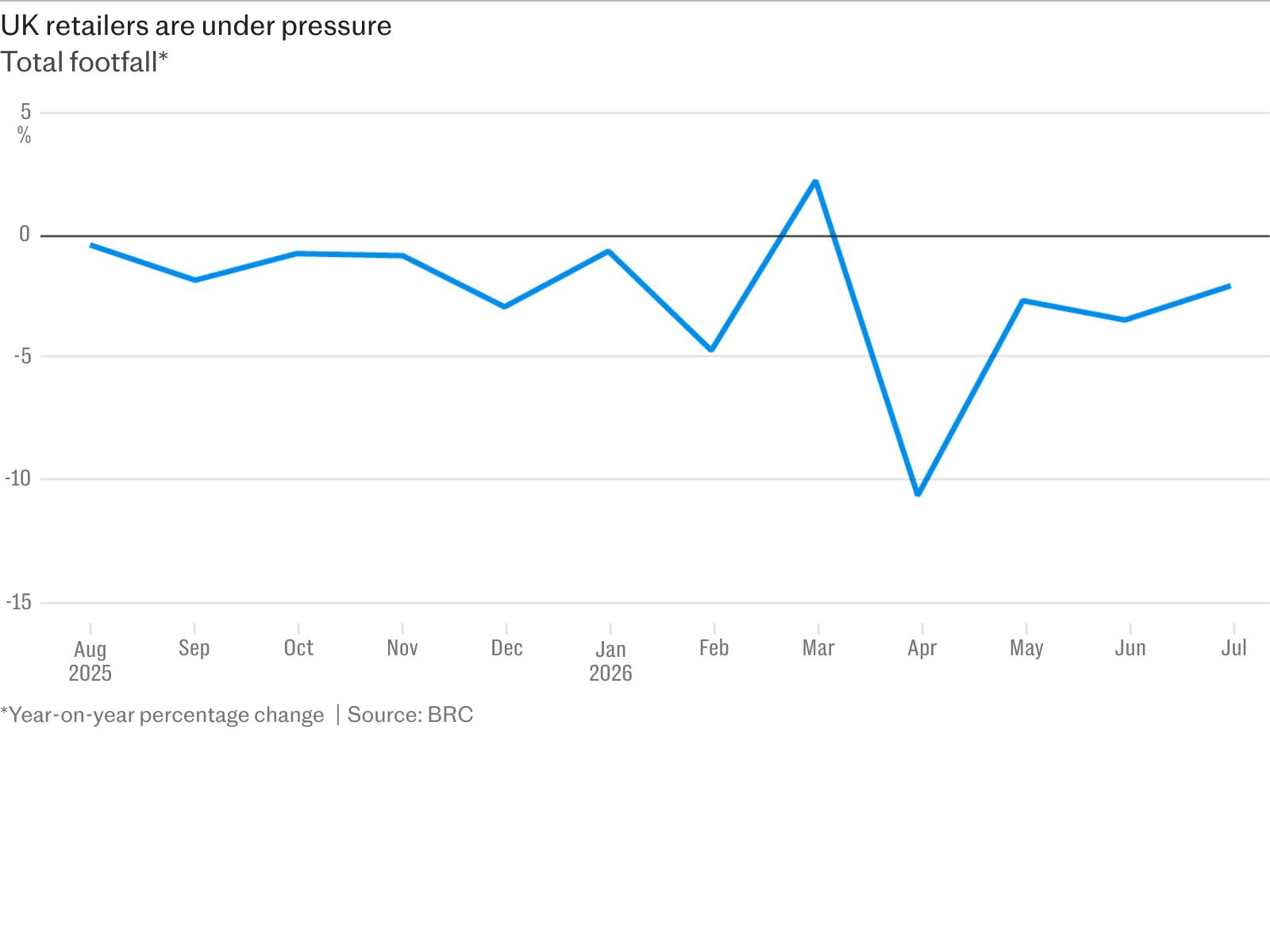
Although food sales are still rising, purchases of other products have dropped compared with last year. A rise in online sales has also failed to make up for fewer customers in physical shops.
If shoppers are too weary to hit the high street, then many will be too hot to work, too – particularly in physical jobs.
“Most of the cost is from lost productivity in parts of the economy where people work outdoors, perform physical jobs or rely on infrastructure that struggles at very high temperatures,” says Beck. “Construction, agriculture, transport, logistics and manufacturing are particularly exposed.”
Studies from the Office for National Statistics (ONS) indicate that agricultural, mining and construction workers can be 60pc less productive when the weather rises above 35 degrees centigrade. Most other industries suffer a 15pc loss in productivity on the hottest days.
The cumulative impact can be considerable. The ONS estimates that heatwaves in 2020 cost the economy more than £5bn.
In June this year alone, Britain lost 24 million working hours and £1.15bn of output as a result of hot weather, according to estimates from the Grantham Research Institute on Climate Change and the Environment at the London School of Economics.
The total blow could be as big as £4.4bn this year, according to think tank Verdant, which says high temperatures also impair the cognitive function of office workers. It estimates that repeated heatwaves throughout the rest of this decade risk taking the total hit to UK output to a cumulative £25.6bn by 2030.
Hot weather puts pressure on prices, too. A poor and early harvest caused by the weather means that some foods will be in shorter supply as the months progress, pushing up prices as a result.
Parched fields are producing less grain. Wheat yields per hectare are down 14pc so far this year compared with last, according to the Agriculture and Horticulture Development Board. Oats are down 9pc.
The total cereal and oilseed harvest this year could be its lowest since 1984, according to the Energy and Climate Intelligence Unit (ECIU), which predicts a fall of 11pc to 19.5 million tonnes.
Potatoes are shrunken as a result of heat stress, while an early pea crop left farmers struggling to gather the harvest before the food went bad.
Animals are being affected too. Cows make less milk in hot weather and Britain lost out on an estimated 25 million pints just in May and June, according to the ECIU. Herds are already eating into food stocks meant to see them through the winter.
All of this comes on top of high fuel prices, including for the diesel that powers tractors, and higher fertiliser prices. Both are caused by the Iran war and disruption to shipping through the Strait of Hormuz.
Advertisement
The result will be higher prices in supermarkets.
Concerns grow over rising costs
Liliana Danila, the chief economist at the Food and Drink Federation (FDF), says: “The UK’s food and drink manufacturers work hard to absorb costs where they can, but are already grappling with rising costs as a result of war in Ukraine and in Iran, so we expect the additional upward pressure of reduced crops will be reflected in retail prices into next year.”
David Thomson, of FDF Scotland, also told the BBC that price rises were “inevitable” because of “significant concerns” regarding the availability of many fruit and vegetable products.
Clive Black and Akhil Patel, at Shore Capital, expect food-price inflation to pick up from 1.7pc today to as much as 5pc later this year.
Supermarkets have so far been able to keep a lid on price rises by importing food from abroad.
But much of Europe is being roasted by the same weather conditions crippling Britain, so this protection may not last long.
Global commodity prices last month rose to their highest in more than three years, according to the Food and Agriculture Organisation, an agency of the United Nations.
Then there is the effect on energy bills. Heatwaves drive up the demand for air conditioning, while drought is prompting the shutdown of nuclear power stations, which need water to cool.
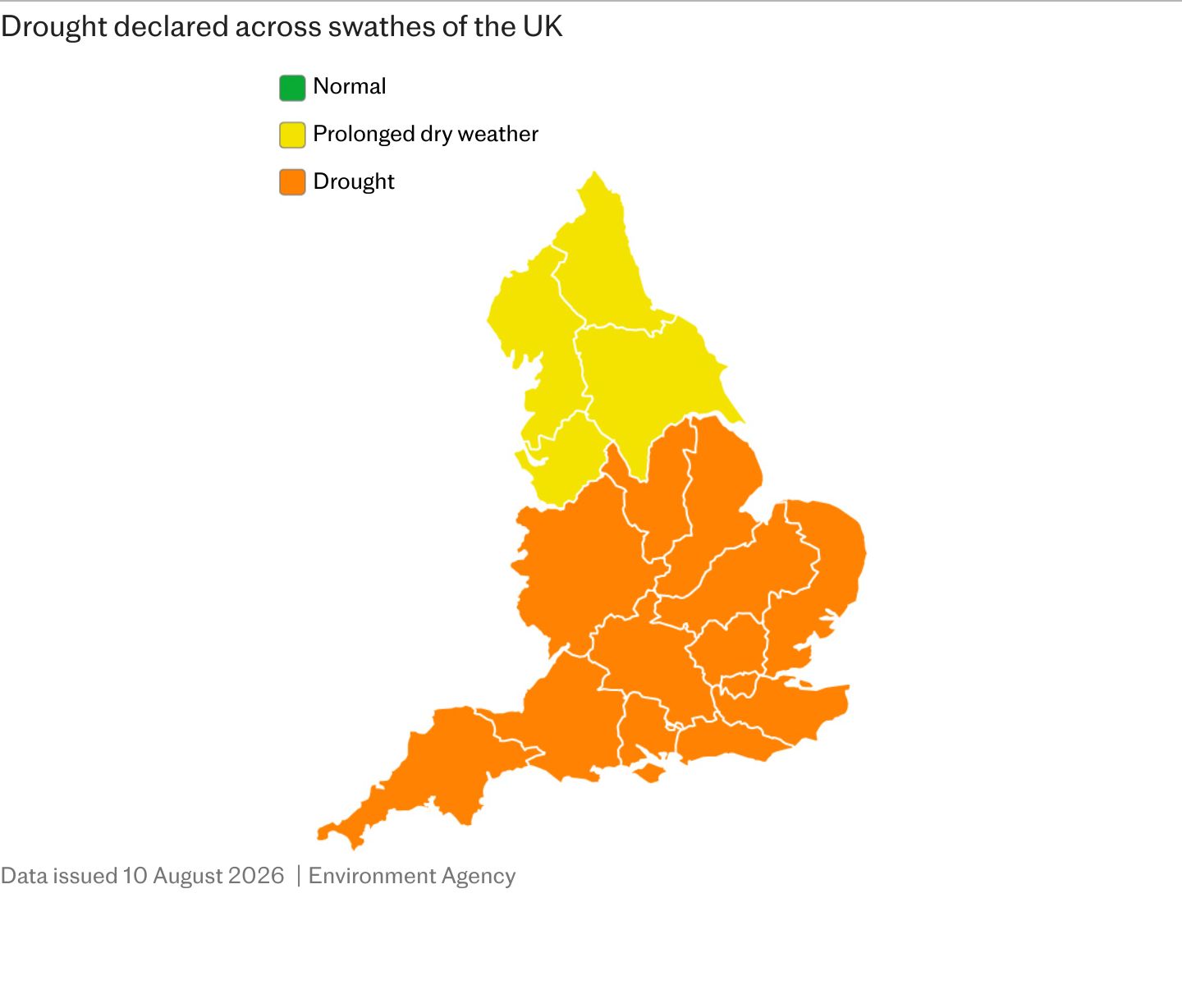
Romanian state-owned nuclear-power producer Nuclearelectrica could shut down its last working reactor on Aug 13 as levels on the Danube river continue to fall, it said on Tuesday.
This won’t affect Britain, but similar shutdowns in France could. The UK draws significant amounts of electricity from Europe via a series of undersea cables. While outages are not seen as likely, the country will have to pay higher prices.
“The heatwaves probably pose a bigger near-term risk to inflation, primarily through the impact on food and energy prices,” says Ruth Gregory, at Capital Economics.
She adds: “High summer temperatures make higher food prices more likely. High temperatures and droughts have also raised electricity demand for air-conditioning.
“Ultimately, though, it is developments in energy markets that will be more important determinants on UK inflation and monetary policy.”
The Bank of England worries that upward pressure on food and energy could ignite a fresh inflation spiral. If the heatwave causes this to happen, interest rates may have to rise.
That would mean a bigger blow to businesses, the Government and families with mortgages.
Thomas Pugh, the chief economist at RSM UK, says: “A summer weather story can eventually become an interest-rate story.
“Higher food and energy prices squeeze household budgets, raise costs for businesses and make it harder for the Bank of England to cut rates.
“The weather forecast could end up affecting everything from the cost of a chocolate bar to the interest rate on a mortgage or business loan.”
Source: “AOL Money”
